

BTE vs RIC vs ITE vs CIC Hearing Aids: Pros, Cons, and Best Use Cases
Choosing a hearing aid is not only about brand or price. The style of hearing aid you choose can affect comfort, sound quality, visibility, battery life, handling, and how well the device suits your hearing loss.
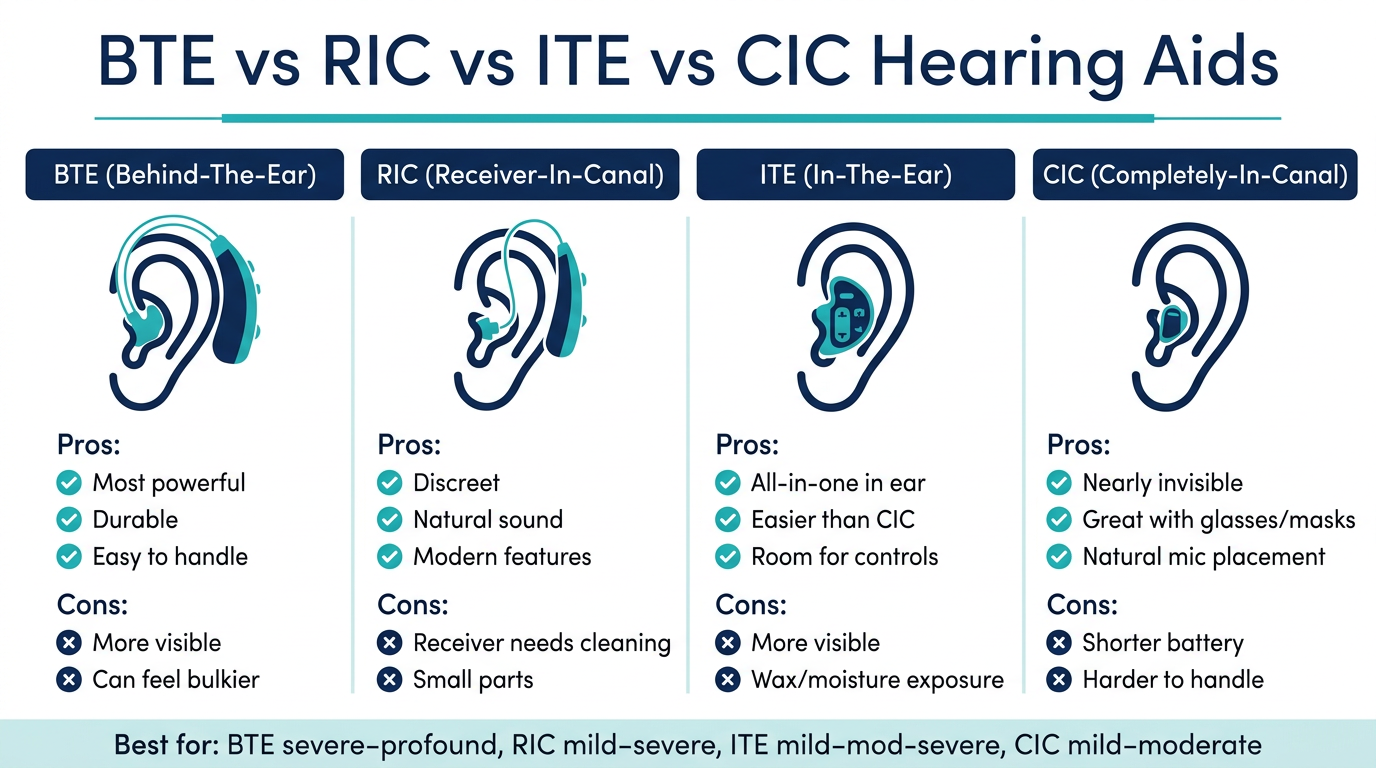
Four of the most common styles of hearing aids are RIC, BTE, ITE, and CIC. Each has clear advantages, and each works best for different users. For many buyers, the biggest questions are how to compare BTE vs RIC hearing aids, whether to choose an in-the-ear option, and how to evaluate an ITE vs CIC hearing aid based on comfort, features, and discretion.
This guide compares the pros, cons, and best use cases to help you make a more confident choice.
What Are RIC Hearing Aids?
Receiver-in-canal (RIC) hearing aids are one of the most popular choices for modern hearing aid users because they offer a strong balance of performance, comfort, and discretion. The device sits behind the ear, while a thin wire connects to a small receiver placed inside the ear canal.
Pros of RIC Hearing Aids
- Discreet Appearance: The behind-the-ear body is small, and the thin wire is usually subtle.
- Natural Sound Quality: Because the receiver sits in the ear canal, sound can feel clear and direct.
- Good Ventilation: Many RIC models use open-fit domes, which can reduce the “plugged ear” feeling.
- Suitable for Many Hearing Losses: RIC devices can often support mild to severe hearing loss, depending on the receiver power.
- Modern Features: Many include Bluetooth streaming, rechargeable batteries, app controls, directional microphones, and advanced noise management.
Cons of RIC Hearing Aids
- Receiver Maintenance: Because the speaker sits in the ear canal, it may be exposed to earwax and moisture.
- Small Parts: The wire, dome, and receiver may be harder to handle for users with dexterity concerns.
- Not Always Ideal for Heavy Moisture or Wax Buildup: Some users may need to clean more frequently or replace parts.
Best Use Cases for RIC Hearing Aids
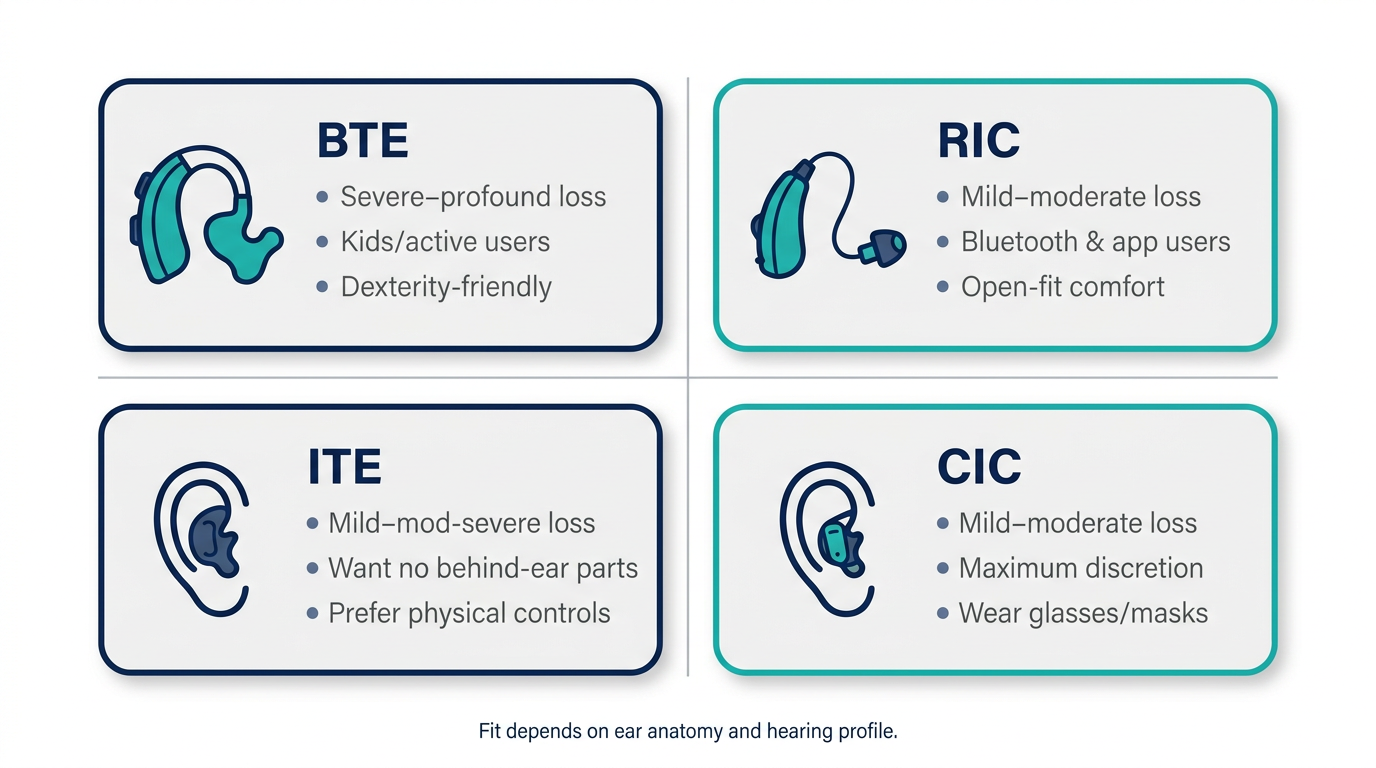
RIC hearing aids are ideal for people who want a discreet, comfortable, feature-rich device. They are especially good for users with mild to moderate hearing loss who want natural sound and modern connectivity. They can also work well for more significant hearing loss when fitted with stronger receivers.
What Are BTE Hearing Aids?
If you need more power or want a hearing aid that is easier to handle, a behind-the-ear (BTE) model may be worth considering. BTE hearing aids sit behind the ear and send amplified sound through a small tube into an earmold or dome in the ear.
Pros of BTE Hearing Aids
- Powerful Performance: BTE hearing aids are often suitable for moderate to profound hearing loss.
- Durable Design: Because the main electronics are housed behind the ear, BTE models can be robust and reliable.
- Longer Battery Life: Their larger size can accommodate larger batteries or stronger rechargeable performance.
- Easier to Handle: The larger body may be easier for users with limited dexterity.
- Good for Children and Active Users: BTEs are commonly recommended for growing ears and for users who need durable devices.
Cons of BTE Hearing Aids
- More Visible than Smaller Styles: Although modern BTEs are sleeker than older versions, they are still usually more noticeable than RIC or CIC models.
- Can Feel Bulkier: Some users may find the behind-the-ear body less comfortable with glasses or masks.
- Earmold Feel: If fitted with a custom mold, the ear may feel more occluded than with open-fit styles.
Best Use Cases for BTE Hearing Aids
BTE hearing aids are best for users who need more power, durability, and ease of handling. They are often a strong choice for severe hearing loss, users with dexterity issues, children, and anyone seeking a dependable device that supports a wide range of hearing needs.
What Are ITE Hearing Aids?
Some users prefer a hearing aid that does not sit behind the ear at all. In-the-ear (ITE) hearing aids address that need by placing the entire device in the outer portion of the ear. Each one is custom-molded, so the shell fits the user’s ear.
Pros of ITE Hearing Aids
- All-in-One Design: The entire device sits in the ear, with no wire or tube behind the ear.
- Easier to Insert Than Smaller In-Canal Styles: Because they are larger than CIC models, they can be easier to place and remove.
- Room for Features: Many ITE models can include directional microphones, volume controls, Bluetooth, and larger batteries.
- Custom Fit: The shell is made to match the user’s ear shape.
Cons of ITE Hearing Aids
- More Visible in the Ear: ITE devices are usually noticeable because they sit in the outer ear.
- Can Pick Up Wind Noise: Their placement may make them more exposed to environmental noise.
- More Exposure to Wax and Moisture: Since the full device sits in the ear, regular cleaning is important.
- May Not Suit All Hearing Losses: Very small ITE styles may not provide enough power for more severe hearing loss.
Best Use Cases for ITE Hearing Aids
ITE hearing aids are a good fit for users who want a custom in-ear device that is easier to handle than tiny canal models. They may suit people with mild to moderately severe hearing loss who prefer not to wear anything behind the ear but still want practical controls and useful features.
What Are CIC Hearing Aids?
For buyers who care most about discretion, CIC hearing aids are often one of the first styles they consider. These devices sit deep inside the ear canal, making them much less visible than larger in-ear or behind-the-ear options.
Pros of CIC Hearing Aids
- Highly Discreet: CIC devices are placed deeply in the ear canal and are often difficult to see.
- Natural Microphone Placement: Because they sit in the ear canal, they can make use of the ear’s natural shape to collect sound.
- Less Interference with Glasses or Masks: There is no behind-ear component.
- Good for Users Who Value Cosmetic Appeal: CIC hearing aids are often chosen by those seeking a low-profile solution.
Cons of CIC Hearing Aids
- Limited Battery Size: Smaller devices typically have shorter battery life.
- Fewer Onboard Controls: Their small size leaves less room for buttons or advanced components.
- May Lack Some Connectivity Features: Bluetooth and rechargeable options may be limited compared with RIC or BTE models.
- Harder to Handle: CIC hearing aids can be difficult to insert, remove, and clean for users with dexterity or vision challenges.
- Not Suitable For All Hearing Losses: They are usually best for mild to moderate hearing loss.
Best Use Cases for CIC Hearing Aids
CIC hearing aids are best for users who want a nearly invisible hearing aid and have mild to moderate hearing loss. They can be a strong choice for people who prioritize discretion and do not need the most advanced connectivity or the highest amplification power.
Which One Is Right for You?
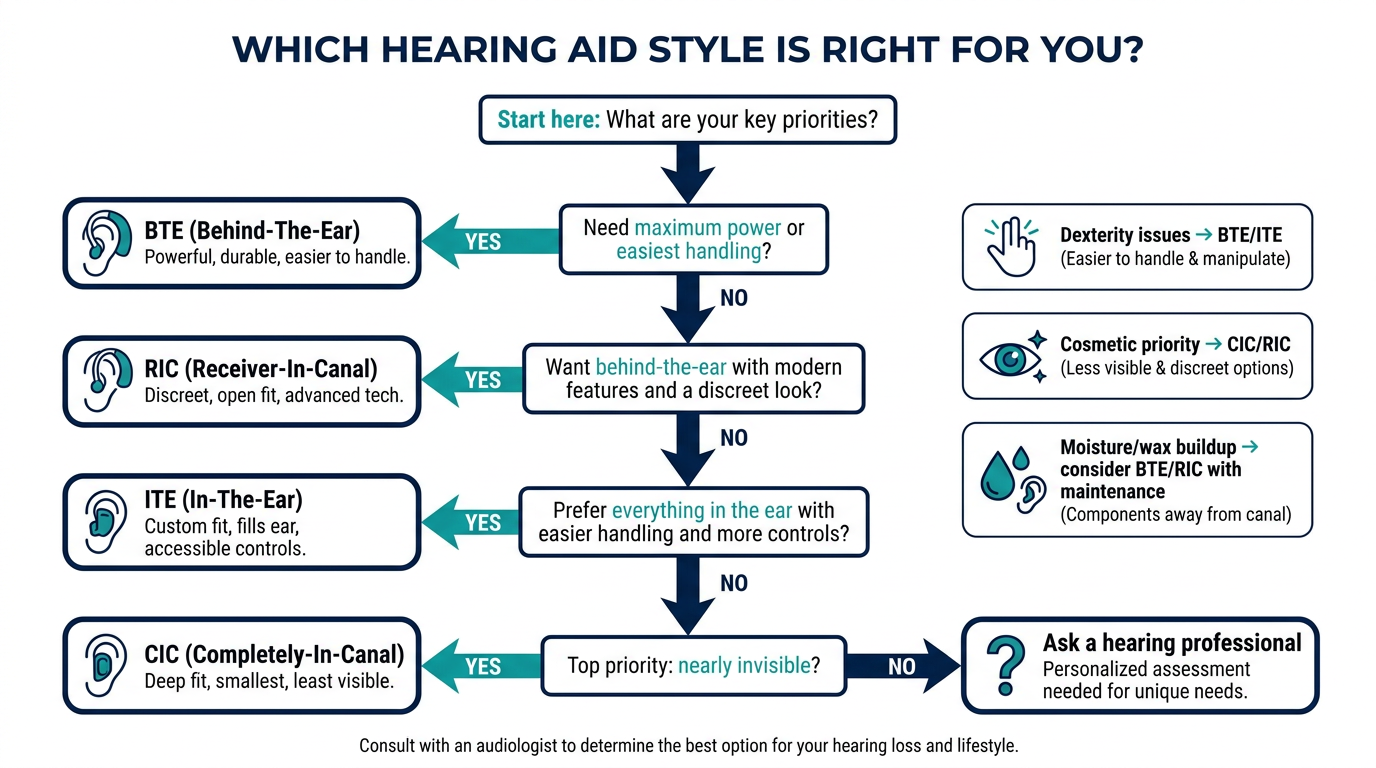
The right hearing aid style comes down to fit, comfort, hearing needs, and how you want the device to work in daily life. Think about what matters most to you. Is it easier handling, stronger amplification, or a more discreet appearance? If you are unsure, a hearing care professional can help you match the right style to your hearing profile and lifestyle.
At Wholesale Hearing Direct, you can compare hearing aids from trusted brands and find options that match your lifestyle, budget, and hearing goals. Explore our extensive collections to find the right style and technology that feels right for you.